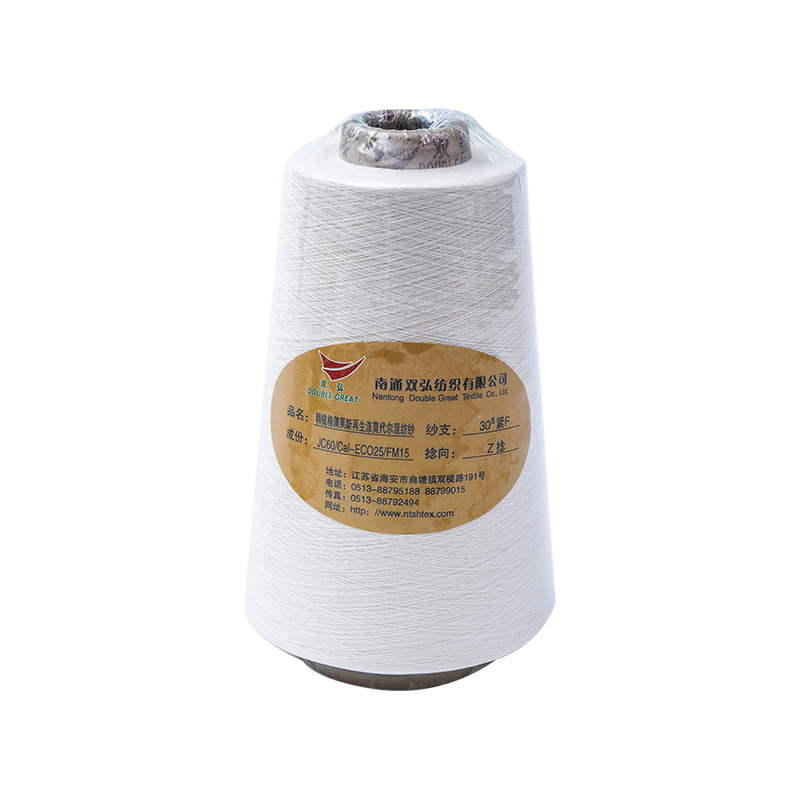

In modern textile production, the selection of raw materials for yarn is the core factor determining the physical performance, durability, and comfort of end products. With the progress of material science, the scientific blending of different fibers has become the mainstream solution for optimizing fabric characteristics. Different proportions of wool blended yarn, cotton acrylic blend yarn, cotton blend yarn, cotton wool blend yarn, cotton nylon blend yarn, wool acrylic blend yarn, and wool and cotton blend yarn exhibit vastly different performance characteristics in the industrial manufacturing sector.
Physical Property Analysis of Common Yarn Combinations
Combinations of Protein Fibers and Cellulose Fibers
The combination of wool and cotton blend yarn and cotton wool blend yarn fully balances the moisture absorption and breathability of cotton fibers with the thermal insulation and resilience of wool. These blended yarns effectively reduce the felting tendency of pure wool fabrics while enhancing the bulkiness and tactile feel of pure cotton fabrics. In the field of knitwear, this combination is an ideal choice for achieving year-round comfort.
Strengthening Schemes for Natural Fibers and Synthetic Fibers
wool acrylic blend yarn: Utilizing the excellent light resistance and bulkiness of polyacrylonitrile fibers (Acrylic) to replace some of the expensive wool, it maintains an appearance close to wool fabrics while significantly reducing fabric weight and improving washing stability.
cotton acrylic blend yarn: This combination resolves the wrinkle-prone nature of cotton fibers; by introducing polyacrylonitrile fibers, it imparts better dimensional stability and color vibrancy to the fabric.
cotton nylon blend yarn: Nylon imparts extremely high wear resistance and tensile strength to cotton fibers. In high-density weaving industries, this form of blending is widely used for fabrics that require extreme strength.
Comprehensive Performance under Multi-component Ratios
wool blended yarn and cotton blend yarn are frequently used in industrial processing to control costs and optimize product parameters. By adjusting the blend ratio, it is possible to precisely regulate the fabric weight, breaking strength, and elongation.
Analysis of Key Technical Parameters
To more clearly evaluate the industrial application potential of different blended yarns, the following table lists the core performance parameters of major fiber combinations during the weaving process (data based on standard moisture regain environments):
| Yarn Type | Breaking Elongation (%) | Wear Resistance (Cycles) | Moisture Regain (%) | Thermal Insulation (CLO) |
| cotton blend yarn | 6 - 8 | 1500 | 8.5 | 0.15 |
| cotton wool blend yarn | 12 - 15 | 2200 | 11.5 | 0.35 |
| wool acrylic blend yarn | 18 - 22 | 3500 | 2.5 | 0.45 |
| cotton nylon blend yarn | 25 - 30 | 8000+ | 4.0 | 0.20 |
| cotton acrylic blend yarn | 10 - 12 | 2800 | 3.5 | 0.25 |
| wool and cotton blend yarn | 14 - 16 | 2000 | 10.0 | 0.38 |
| wool blended yarn | 15 - 20 | 2500 | 12.0 | 0.50 |
Practical Considerations for Blending Processes in Production
In actual industrial weaving, when selecting wool blended yarn or cotton blend yarn, focus must be placed on the fineness matching of the fibers. Excessive differences in fiber fineness may lead to uneven blending, which in turn affects the surface smoothness and strength uniformity of the fabric.
For industrial fabrics requiring high durability, cotton nylon blend yarn provides high physical support. Through the long-chain molecular structure of nylon, it effectively inhibits the fatigue breakage of cotton fibers under repeated stretching. In application scenarios where fabric feel and thermal insulation are prioritized, wool and cotton blend yarn and wool acrylic blend yarn utilize the complementarity between chemical fibers and natural fibers to overcome the limitations of single fiber materials.
Through the scientific application of cotton wool blend yarn and other blended structures, the production side can adjust spinning processes for specific needs, thereby precisely achieving target specifications and optimizing the mechanical structure of textile products. Understanding the differences in physical and chemical indicators of the materials mentioned above is the basis for ensuring the stability of downstream product quality.